

How to Know If God Is Speaking to You: 7 Biblical Ways to Discern His Guidance
Have you ever wondered, “Is God speaking to me, or is this just my own thoughts?”
You are not alone.
Many Christians want to hear from God and understand His direction for their lives. The difficult part is knowing whether a thought, feeling, opportunity, or strong impression is actually from God.
The good news is that God does not expect us to guess.
The Bible gives us clear ways to test what we believe God may be saying.
Learning how to know if God is speaking to you is not about looking for mysterious signs everywhere. It is about knowing God’s Word, praying, growing in wisdom, and learning to recognize what agrees with His character.
Here are seven biblical ways that can help you discern God’s guidance.
God certainly guides His people.
However, that does not mean every thought that enters our mind is a message from God.
Sometimes our thoughts come from our own wishes, fears, memories, or emotions. At other times, we may simply misunderstand a situation.
That is why discernment matters.
God has already given us His Word. Scripture should always be the foundation we use when deciding whether something is truly from Him.
God may guide us through:
Use this version in WordPress:
* His Word * Prayer * The Holy Spirit * Wise Christian counsel * Circumstances * Conviction * Spiritual wisdom
But none of these should ever lead us away from what God has already revealed in Scripture.
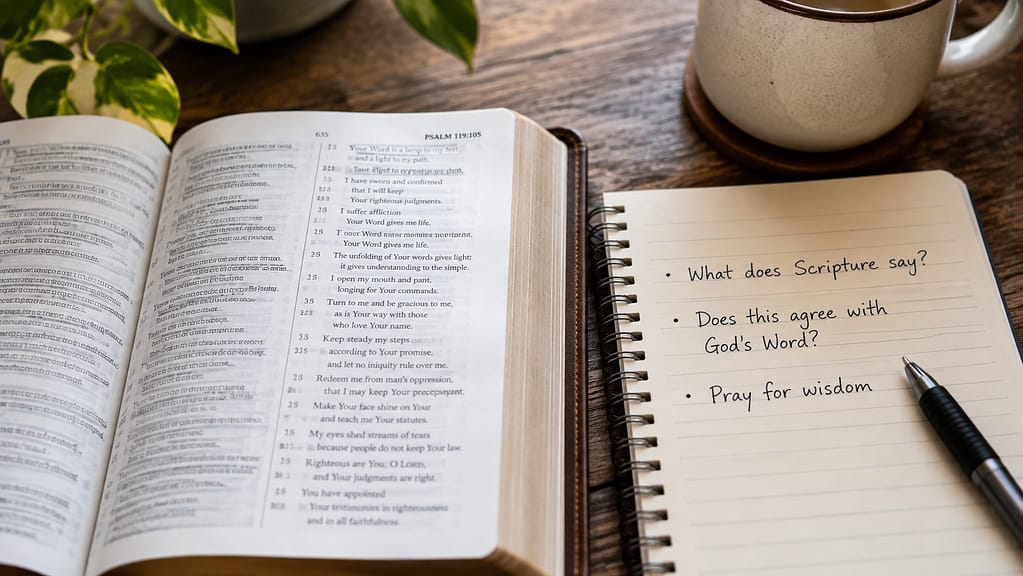
This is the most important test.
God will never tell you to do something that contradicts His Word.
Second Timothy 3:16–17 teaches that Scripture comes from God and equips believers to live the way He wants them to live.
That means the Bible is our standard.
For example, if you believe God is telling you to lie, hurt someone, take revenge, cheat, or act dishonestly, you can be confident that message is not from God.
It does not matter how strongly you feel about it.
God does not contradict Himself.
Before acting on what you believe God may be saying, ask yourself:
“Does this agree with what the Bible teaches?”
If you are not sure, take time to study Scripture before making a decision.
If reading the Bible still feels difficult, my Bible study for beginners guide can help you get started one step at a time.
This is closely connected to the first point, but it deserves separate attention.
God may challenge you.
He may lead you to forgive someone when you would rather stay angry.
He may encourage you to speak the truth when staying silent would be easier.
He may convict you about something you need to change.
But He will never lead you into sin.
James 1:13 makes it clear that God does not tempt people to do evil.
If something is pulling you toward dishonesty, bitterness, hatred, greed, revenge, or another action Scripture clearly warns against, it is not God’s direction.
God’s guidance will always be consistent with His holiness and His character.
Jesus promised that the Holy Spirit would guide believers into truth.
You can read about this in John 16:13.
The Holy Spirit helps Christians understand God’s Word and recognize areas in their lives that need to change.
Sometimes that involves conviction.
Conviction is different from simply feeling bad about yourself.
God’s conviction points toward something specific and leads you toward repentance, forgiveness, and change.
It does not leave you trapped in hopelessness.
For example, you may suddenly realize that your attitude toward someone has been wrong. You may feel prompted to pray, apologize, or forgive.
That can be a good time to stop and ask:
“Is the Holy Spirit showing me something I need to change?”
Then compare that feeling with Scripture.
Prayer is not only about asking God for things.
It is also about seeking His wisdom.
James 1:5 tells believers to ask God for wisdom when they need it.
That is especially important when you are confused about what to do.
You might pray something simple such as:
“Lord, I want to make the right decision. Please give me wisdom and help me understand what agrees with Your Word.”
You do not need complicated words.
Speak honestly to God.
Then give yourself time.
Sometimes the answer becomes clearer as you pray, read Scripture, and think carefully about the situation.
Do not feel that you must force an immediate answer.

Sometimes we are too close to a situation to see it clearly.
That is where mature Christian advice can help.
Proverbs 15:22 teaches that plans can fail when there is no counsel, but there is value in having wise advisers.
This does not mean asking many people until someone finally tells you what you want to hear.
Choose people who:
- Know Scripture
- Have a mature Christian faith
- Will be honest with you
- Are willing to tell you when you may be wrong
- Genuinely want God’s best for you
A trusted pastor, church leader, mature Christian friend, or Bible teacher may help you see something you have overlooked.
Wise counsel should point you back to God and His Word, not replace them.
Jesus taught that we can recognize things by their fruit.
Galatians 5:22–23 also describes the fruit produced by the Holy Spirit, including love, joy, peace, patience, kindness, goodness, faithfulness, gentleness, and self-control.
When you are trying to understand God’s guidance, consider where a decision is leading you.
Ask yourself:
Will this strengthen my faith?
Will this encourage honesty?
Will this bring me closer to God?
Will this harm another person?
Am I acting from wisdom or simply reacting emotionally?
Good fruit does not always mean the easiest path.
Sometimes doing the right thing is difficult.
Forgiving someone can be difficult.
Admitting you were wrong can be difficult.
Walking away from something unhealthy can be difficult.
But difficulty does not mean God is absent.
Sometimes obedience requires courage.

Waiting can be one of the hardest parts of following God.
We often want an immediate answer.
Should I do this?
Should I go there?
Should I accept this opportunity?
Should I make this change?
Sometimes the answer becomes clear quickly. Other times it does not.
Psalm 27:14 encourages believers to wait for the Lord and remain strong.
Proverbs 3:5–6 also teaches us to trust God rather than relying only on our own understanding.
If you do not have clarity, you may not need to make the decision immediately.
Waiting can protect you from acting too quickly.
Continue praying.
Continue reading God’s Word.
Continue seeking wisdom.
There have also been times in my own life when I could not immediately see what God was doing. I
n my From Darkness to Light testimony, I share how I can now look back and recognize God’s faithfulness through some very difficult times.
God is not confused just because you are unsure.
Sometimes you can pray, read your Bible, and still feel uncertain.
That does not mean you have failed.
It simply means you may need more time and wisdom.
You do not have to turn every decision into a spiritual mystery.
Some choices are simply decisions God allows us to make using wisdom.
For example, the Bible may not tell you which job to take, which car to buy, or what color to paint your kitchen.
But biblical principles can still guide your decision.
You can ask:
* Is it wise? * Can I afford it? * Will it negatively affect my responsibilities? * Does it involve anything sinful? * Have I prayed about it? * Have I considered wise advice?
Sometimes God gives us freedom to make a sensible choice.

Christians can sometimes become so focused on signs that almost everything starts looking like a message from God.
A song comes on the radio.
A certain number appears repeatedly.
Someone says a particular word.
A door opens unexpectedly.
These things may get our attention, but they should never become more important than Scripture.
Do not build an important life decision on a coincidence alone.
God has given us His Word for a reason.
When something is truly from God, it will never require you to ignore clear biblical teaching.
If you remember only one point from this article, remember this:
God will never contradict His own Word.
Feelings can change.
Circumstances can change.
People’s opinions can change.
God’s truth remains dependable.
That is why reading the Bible regularly is one of the best ways to grow in spiritual discernment.
The more familiar you become with Scripture, the easier it becomes to recognize teaching, advice, and ideas that do not match what God has said.
You begin to know His character.
You learn what He values.
You understand what He warns against.
You become better prepared to recognize truth.
Spiritual discernment usually grows over time.
You do not need to understand everything immediately.
Start with simple habits.
Read a portion of Scripture each day.
Pray honestly.
Ask God for wisdom.
Write down questions you have.
Speak with mature Christians you trust.
And when you believe God may be guiding you, compare that direction with Scripture before you act.
The goal is not to become obsessed with hearing a special message about every decision.
The goal is to know God more deeply. If you want to strengthen your relationship with Him, read my guide on how to grow closer to God.
When you know His Word, understand His character, and stay close to Him, recognizing His guidance becomes much clearer.
Learning how to know if God is speaking to you is part of growing in your Christian faith.
You may not always get an immediate answer.
There may be times when you are uncertain.
That is okay.
Go back to the Bible.
Pray for wisdom.
Ask trusted Christians for advice.
Look at the fruit of the decision.
And do not be afraid to wait when you do not have clarity.
God does not ask you to follow confusion.
He calls you to follow Him.
The closer you grow to God through His Word, prayer, obedience, and faith, the better you will understand His character and His ways.
Father, thank You for loving me and guiding me.
Give me wisdom when I am unsure what to do. Help me recognize what agrees with Your Word and reject anything that does not come from You.
Teach me to trust You, listen carefully, and follow Your direction.
Help me grow closer to You each day.
In Jesus’ name, Amen.
Frequently Asked Questions
How Do I Know If God Is Speaking to Me?
Compare what you believe you are hearing with Scripture. God’s guidance will never contradict His Word or encourage you to sin. Prayer, biblical wisdom, the Holy Spirit, and mature Christian counsel can also help you discern His direction.
Can God Speak Through Other People?
God can use other Christians to give wise advice, encouragement, or correction. However, what they say should still be compared with Scripture.
Can God Guide Me Through Circumstances?
Circumstances can sometimes help guide a decision, but they should not be your only test. An open or closed door does not automatically prove what God wants.
Always consider Scripture, prayer, wisdom, and the full situation.
What Should I Do When God Seems Silent?
Keep praying, reading Scripture, and trusting Him. Do not force an answer. Sometimes waiting is part of God’s guidance.
How Can I Hear God More Clearly?
Spend regular time reading Scripture and praying. As you become more familiar with God’s Word and character, you will become better equipped to recognize what agrees with Him and what does not.
If you are still beginning your journey of faith, visit The Road Home to God and Christian encouragement.
May God give you wisdom, peace, and confidence as you seek His guidance and grow closer to Him each day.
God bless you, Ingrid

